
A common misconception in DeFi is that disconnecting a wallet from a website revokes the permissions that website received. It does not. A wallet connection is usually an interface relationship; a token approval is an on-chain authorization that may remain in place until it is changed or revoked. On a single chain, that distinction is easy to miss. Across Ethereum and multiple EVM networks, it becomes a recurring operational risk.
Consider a US-based user who moves between Ethereum, Base, Arbitrum, Polygon, and a newer application-specific network. They test a yield market, approve a stablecoin, try a bridge, and later abandon two of the applications. Nothing looks wrong in the wallet. Yet several contracts may still be authorized to spend tokens on those separate networks. The practical challenge is not merely identifying a malicious transaction. It is maintaining an accurate map of old permissions, chain by chain, while continuing to use DeFi efficiently.
What a token approval actually changes
For standard fungible tokens, an approval commonly changes an allowance recorded in the token contract. The owner authorizes a spender contract to transfer up to a specified amount of that token on the owner’s behalf. The decentralized application may request a limited allowance, an effectively unlimited allowance, or a value that looks modest but is renewed repeatedly as the user interacts.
This is the first important mental model: the wallet does not “hold” the approval as a private setting. The token contract holds the relevant state on a particular blockchain. A wallet helps the user initiate, inspect, and manage transactions, but it cannot erase an allowance merely because the user closes a browser tab or disconnects a site.
The same address can therefore have different approval histories on different EVM chains. An allowance granted on Ethereum does not automatically authorize the same spender on Arbitrum. That separation is useful because a compromise on one network does not mechanically grant identical permissions everywhere else. It is also inconvenient: a user who thinks in terms of one portfolio may need to think operationally in terms of several independent ledgers.
There is another subtle boundary. Token approvals are not the only authorization mechanism in DeFi. Permit-style signatures, marketplace operator approvals for non-fungible tokens, smart-account permissions, and application-specific delegation can follow different rules. A wallet approval panel can be valuable without being a complete security inventory. Users should treat what they see as a decision aid, not proof that every possible authorization has been discovered.
Why multi-chain management is harder than it appears
In the early wallet era, users often treated a wallet as a passive key container: protect the seed phrase, check the address, and confirm the transaction. DeFi changed that role. Wallets became transaction interpreters, network selectors, signing surfaces, and increasingly, risk-management tools. The expansion of EVM networks added scale to the problem. More chains created more opportunities, but also more fragmented state to review.
Suppose an application asks for permission to spend a stablecoin. A hurried user may focus on the application’s name and the requested amount. A stronger review asks different questions: Which chain is active? Which contract is receiving the approval? Is the amount limited? Is this approval necessary for the intended action? Is the contract address consistent with the application and network? The interface can make these questions easier to ask, but it cannot answer whether an unfamiliar protocol deserves trust.
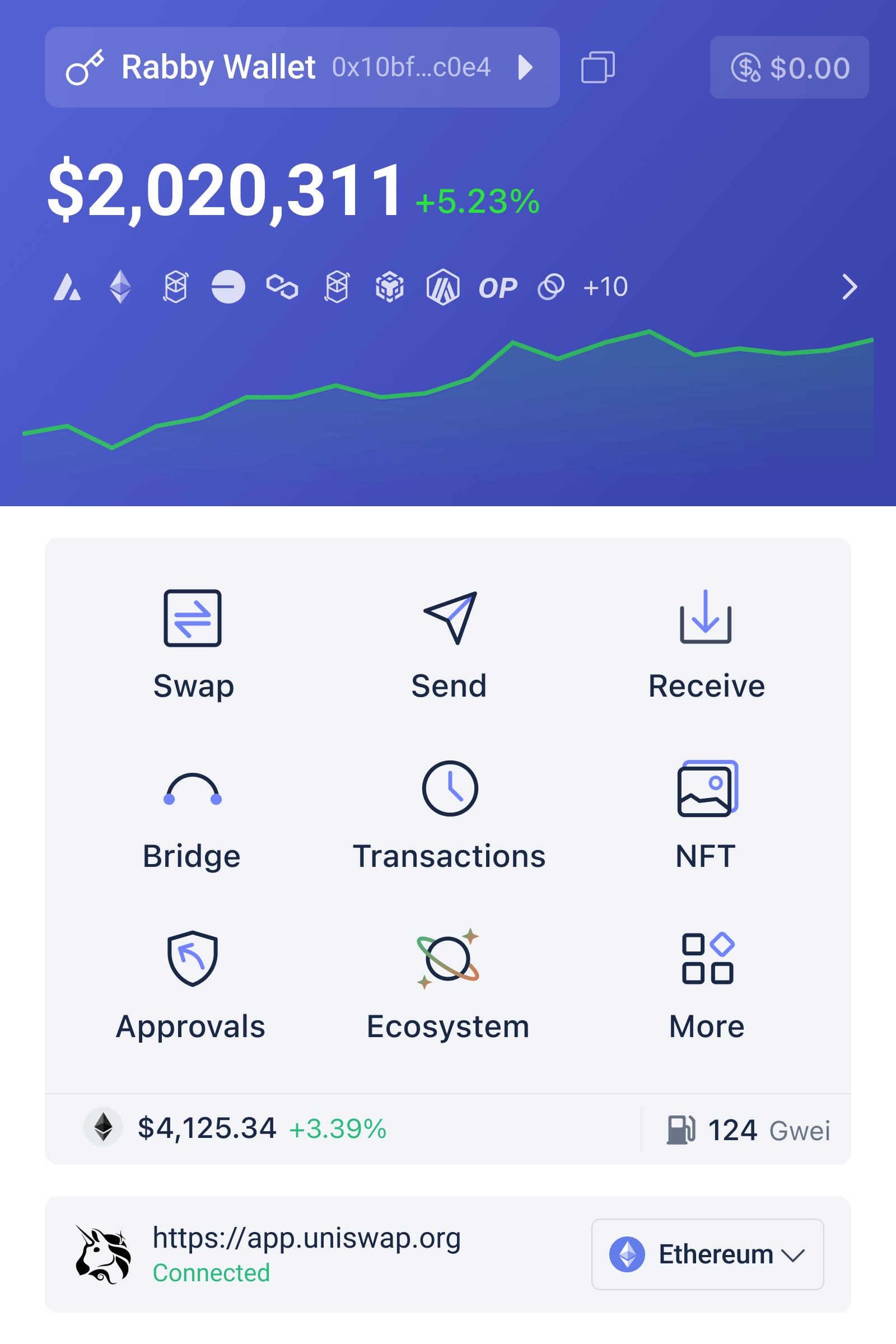
This is where a multi-chain wallet extension can offer practical value. A user considering the rabby wallet extension should think of installation as the beginning of a review workflow, not the completion of a security upgrade. Before using it, download only from a source the user can independently verify, inspect the permissions requested by the browser, and confirm that the selected network and account are the intended ones. The extension may help present transaction and approval context, but the final decision remains with the signer.
Recent project messaging on August 24, 2026, positions Rabby Wallet as a wallet for Ethereum and EVM networks, with support across Chrome and Brave. That broad multi-chain orientation is relevant to approval management because a useful interface must reduce network confusion without hiding network differences. The key test is not simply how many chains a wallet lists. It is whether the user can tell which chain, asset, spender, and permission are involved at the moment a decision is made.
A practical approval-management routine
A workable routine begins before a transaction is signed. When an application requests an approval, inspect the asset and spender, then compare the requested allowance with the action being attempted. A limited approval can reduce exposure if a contract is later exploited, although it may require another approval transaction later. An unlimited approval is more convenient, but it leaves a larger authorization surface. Neither choice eliminates smart-contract risk; they represent different trade-offs between friction and residual exposure.
After using a protocol, record the chain and the purpose of the approval. This sounds low-tech, but a short note can prevent a common failure mode: forgetting why a permission exists. Periodically review approvals on each network where the address has interacted with DeFi. Prioritize dormant protocols, unknown spenders, high-value assets, and allowances that no longer match current activity.
Revocation is also a transaction, which means it normally consumes network resources and must be signed correctly. On a congested or expensive network, the fee may influence timing. On a chain with inexpensive transactions, frequent cleanup may be more practical. Revoking an approval does not recover funds already transferred, reverse a completed exploit, or make a malicious protocol safe to revisit. It changes a permission state; it is not a time machine.
For larger balances, separating activities across accounts can be more robust than attempting perfect cleanup. A spending account used for experimentation should not necessarily hold long-term savings. A hardware wallet or other signing arrangement can reduce exposure to some online threats, but it does not make blind signing safe. If the user approves a dangerous contract with a hardware device, the transaction can still be dangerous.
The limitation that interfaces cannot solve
Wallet design can improve visibility, but visibility is not the same as verification. Contract labels may be incomplete, token symbols can be misleading, and a legitimate-looking application can still contain flawed or malicious logic. Transaction simulation and warnings are useful because they translate low-level activity into a more understandable preview, yet simulations depend on assumptions about current chain state and may not capture every future behavior.
There is also a human-factors trade-off. Showing every technical detail can overwhelm a newcomer; hiding too much can encourage false confidence. The best interface is therefore not the one that promises certainty. It is the one that surfaces the details most likely to change a decision: network, recipient or spender, assets affected, approval scope, and whether the action is reversible.
For US DeFi users navigating several networks, a reusable heuristic is simple: treat every approval as an active permission with an owner, a scope, a chain, and an expiry assumption. If there is no clear reason to keep it, review whether it should remain. If an interface cannot make those four dimensions understandable, slow down rather than signing by habit.
What to watch as wallets mature
The likely direction of wallet development is toward more contextual signing: clearer simulations, stronger contract identification, chain-aware approval dashboards, and warnings that distinguish an ordinary interaction from a broad authorization. If those tools become more consistent across EVM networks, users may spend less time searching for fragmented approval records. That outcome is conditional, however. It depends on reliable data, accurate labeling, compatible token standards, and users who still inspect high-value actions rather than accepting every warning automatically.
The deeper change is conceptual. A crypto wallet is no longer just a place from which transactions are sent. It is an operating layer for permissions distributed across many contracts and chains. Rabby’s multi-chain positioning matters in that context not because a single extension can remove every risk, but because better organization can help users notice risks earlier. The durable habit is to connect only when needed, approve narrowly when practical, review permissions across every active network, and treat convenience as a trade-off rather than a guarantee.
Frequently asked questions
Does disconnecting a DeFi application revoke its token approval?
No. Disconnecting usually ends the wallet interface session. The allowance recorded by the token contract can remain active until a separate transaction changes or revokes it. The approval must be considered in the context of the specific chain and token.
Should every token approval be revoked immediately?
Not necessarily. Revocation can reduce the exposure created by an unused permission, but it costs a transaction fee and may require a new approval later. A sensible approach is to prioritize dormant protocols, unknown spenders, broad allowances, and valuable assets rather than treating every approval as equally urgent.
Can a wallet extension guarantee that a DeFi transaction is safe?
No. A wallet can improve transaction visibility and highlight unusual behavior, but it cannot guarantee that a contract is secure or that an application will behave honestly in the future. Users still need to verify the network, asset, spender, and intended outcome before signing.